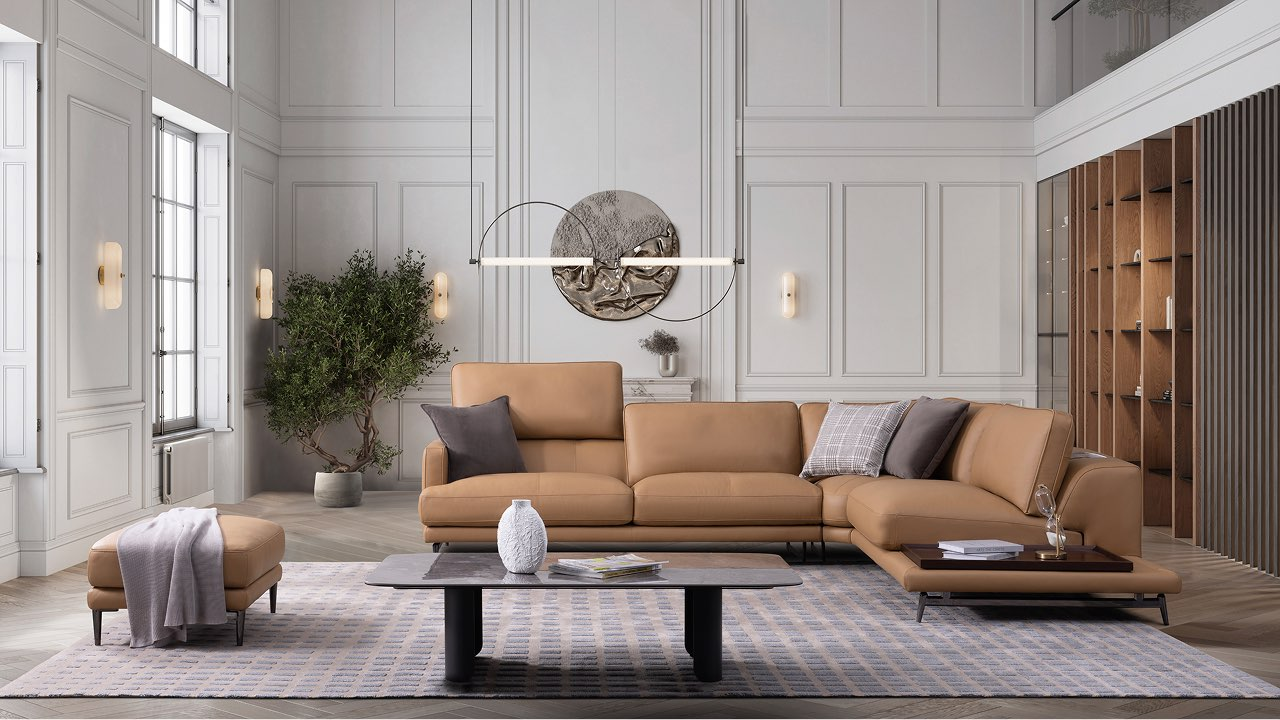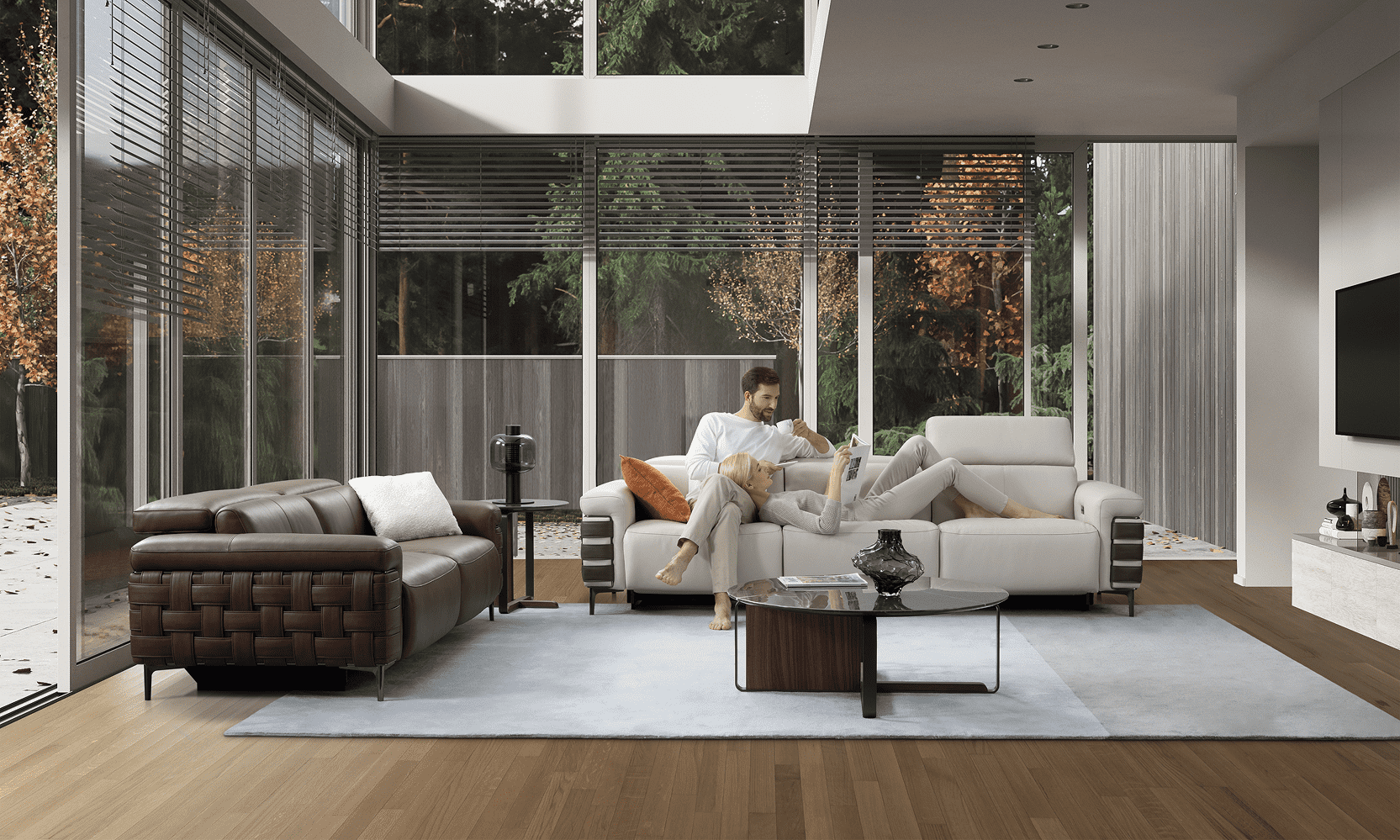
The sofa was never supposed to be a workstation. And yet, for a growing number of people, it has become exactly that — the place where emails get answered, calls get taken, and the line between working and not working quietly dissolves into the cushions.
If your sofa is pulling double duty as both your living room centrepiece and your de facto office, it is worth thinking carefully about what you are actually sitting in for eight (or more) hours a day. Not all sofas are built for this. Here is what to look for in one that is.
Support First, Comfort Second
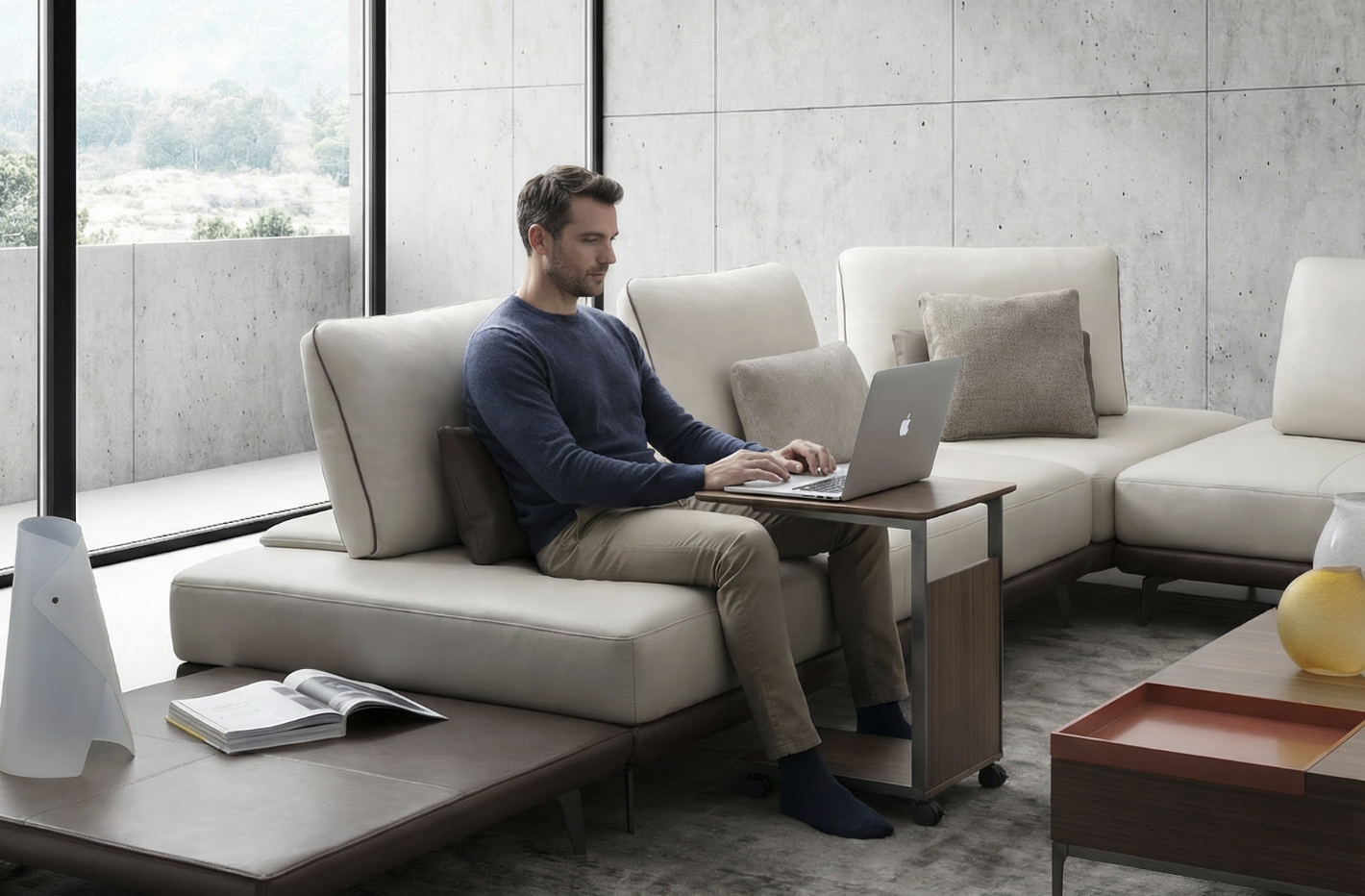
This is the part most people get wrong. A sofa that feels immediately, sumptuously comfortable in a showroom is not necessarily a sofa that will serve you well after three hours of focused work. Deep, cloud-like seating that invites you to sink in is wonderful for an evening of doing nothing. For sustained sitting with a screen in front of you though, it works against you.
What you need is a sofa that offers solid support — a seat that holds you rather than absorbs you, a backrest that meets your lumbar region rather than leaving it unsupported, and a seat height that allows your feet to rest on the floor without your hips dropping below your knees.
A quick guide to seat height: Most adults are best served by a seat height between 43 and 48cm from the floor. Anything significantly below 43cm (like the low-slung, deep aesthetic sofas) tends to work against sustained sitting relatively quickly, regardless of how good they look.
At Domicil, the suspension systems we use across our sofas — a combination of robust elastic webbing and no-sag springs — are engineered to provide exactly this kind of sustained, even support. Paired with high-density, high-resilience polyurethane foam that maintains its structure over years of daily use, the result is a sofa that supports the way you actually sit, not just the way you think you will.
The Backrest Question
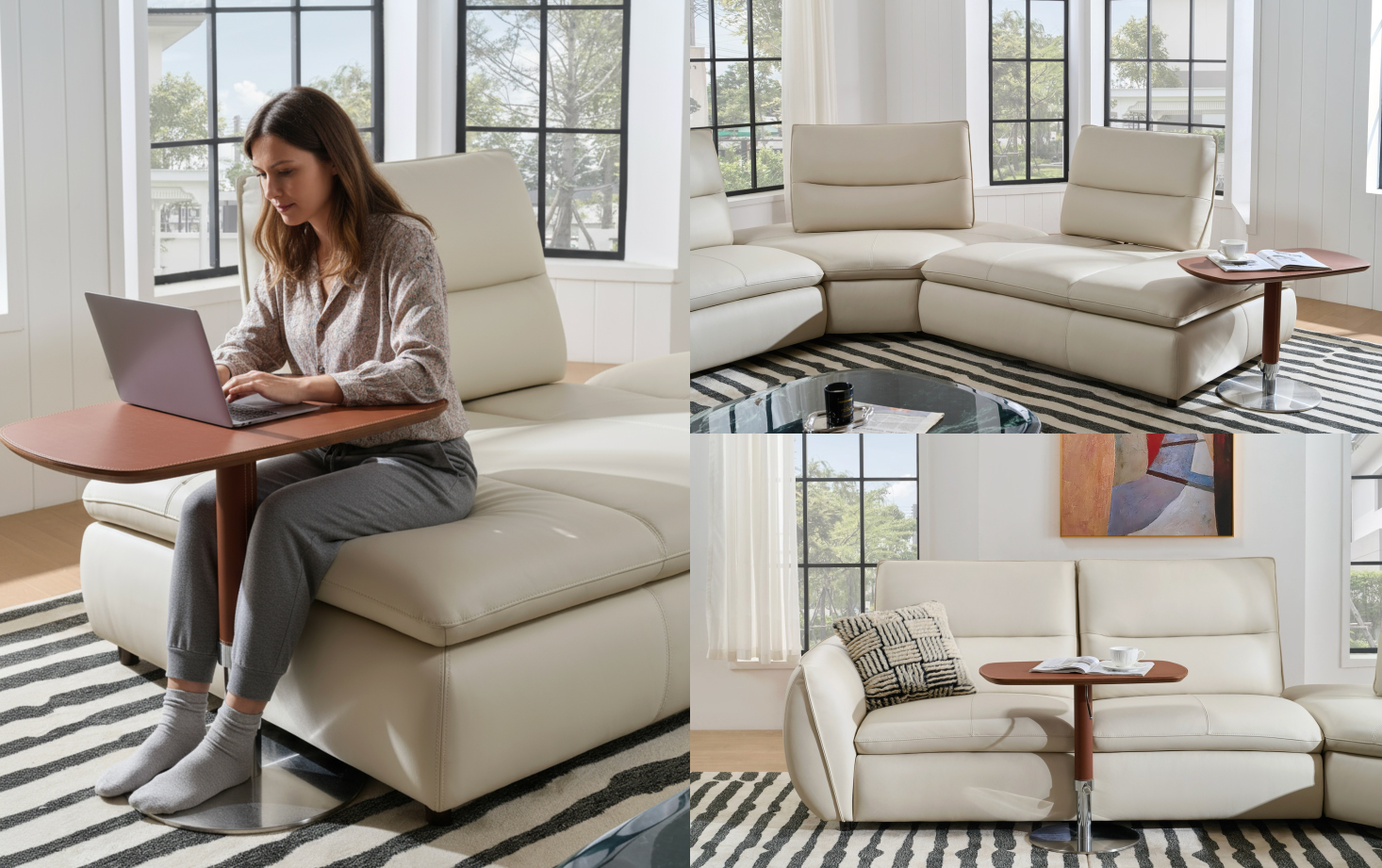
For work-from-home use, the backrest is arguably more important than the seat. A backrest that is too reclined encourages a posture that is hard to sustain for long periods. Too upright and it becomes uncomfortable in a different way. What you are looking for is a backrest that sits at a slight angle — supportive enough for focused work, comfortable enough for the transition into relaxation that should follow it.
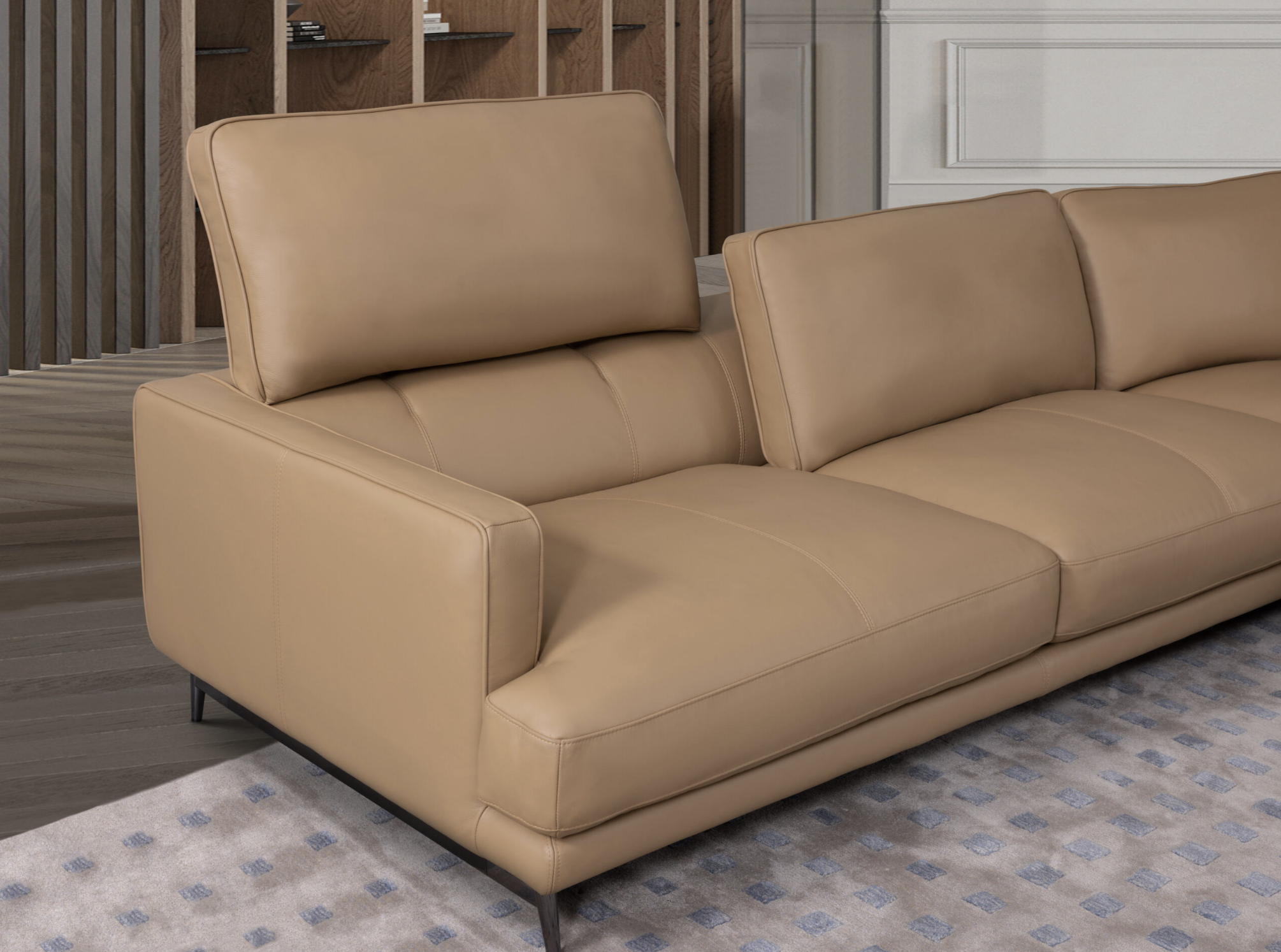
Several Domicil pieces address this directly. The Lu James sofa from the Klassik Collection features adjustable backrests that transitions from upright to reclined, which makes it genuinely versatile for different modes of use across a working day.
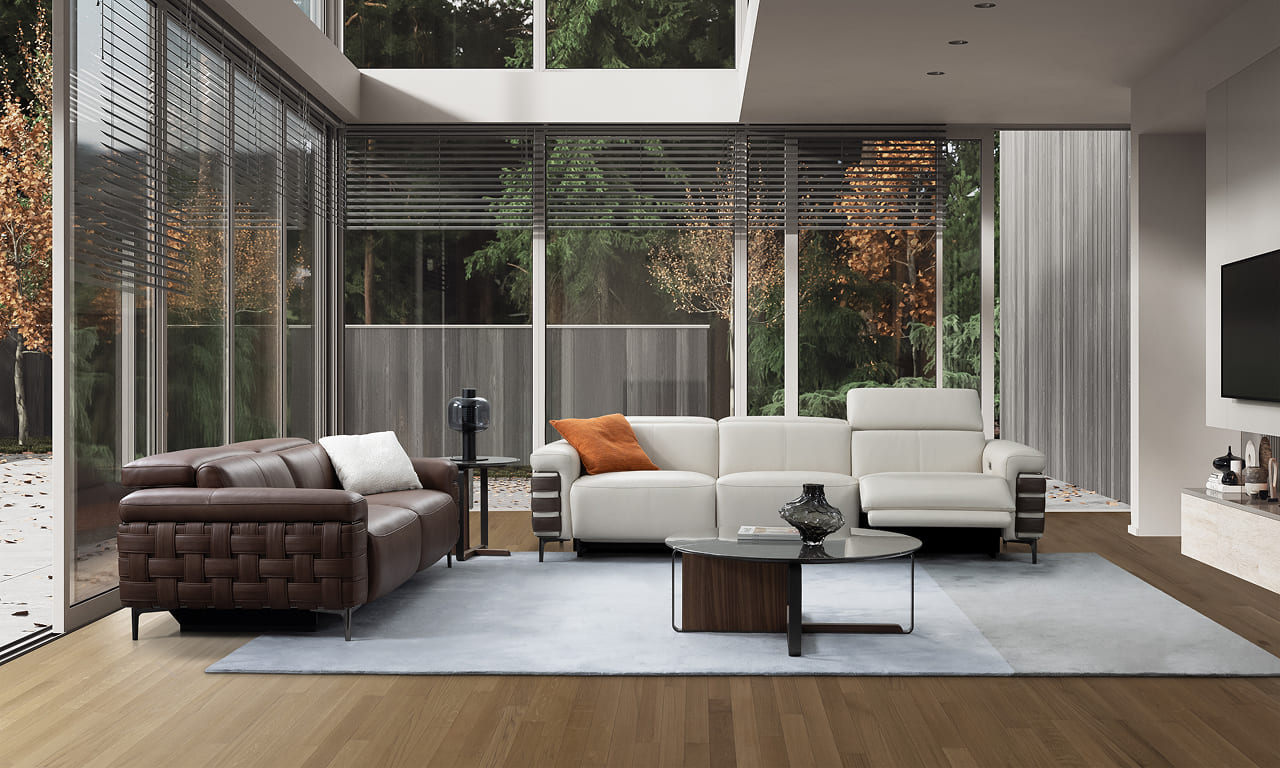
The Baskt recliner takes a similar approach with an independently adjustable backrest and dual electric motors per seat — meaning you can find your exact position rather than accepting whatever the fixed geometry of a standard sofa offers.
If you are spending significant portions of your day on a sofa, adjustability is not a luxury. It is the feature that makes the difference between a sofa that works for your life and one that works against your back.
Durability and Fabric Choice
A sofa that sees eight hours of daily use will age faster than one used only in the evenings and at weekends. This makes material choice more consequential for work-from-home households than it might otherwise be.
Leather is the most durable option for high-use scenarios. It does not trap dust or absorb moisture, it is easy to clean, and — if the quality is right — it develops a patina rather than simply deteriorating. Full-grain and premium leathers used across the Domicil range are selected specifically for their longevity under daily use conditions.
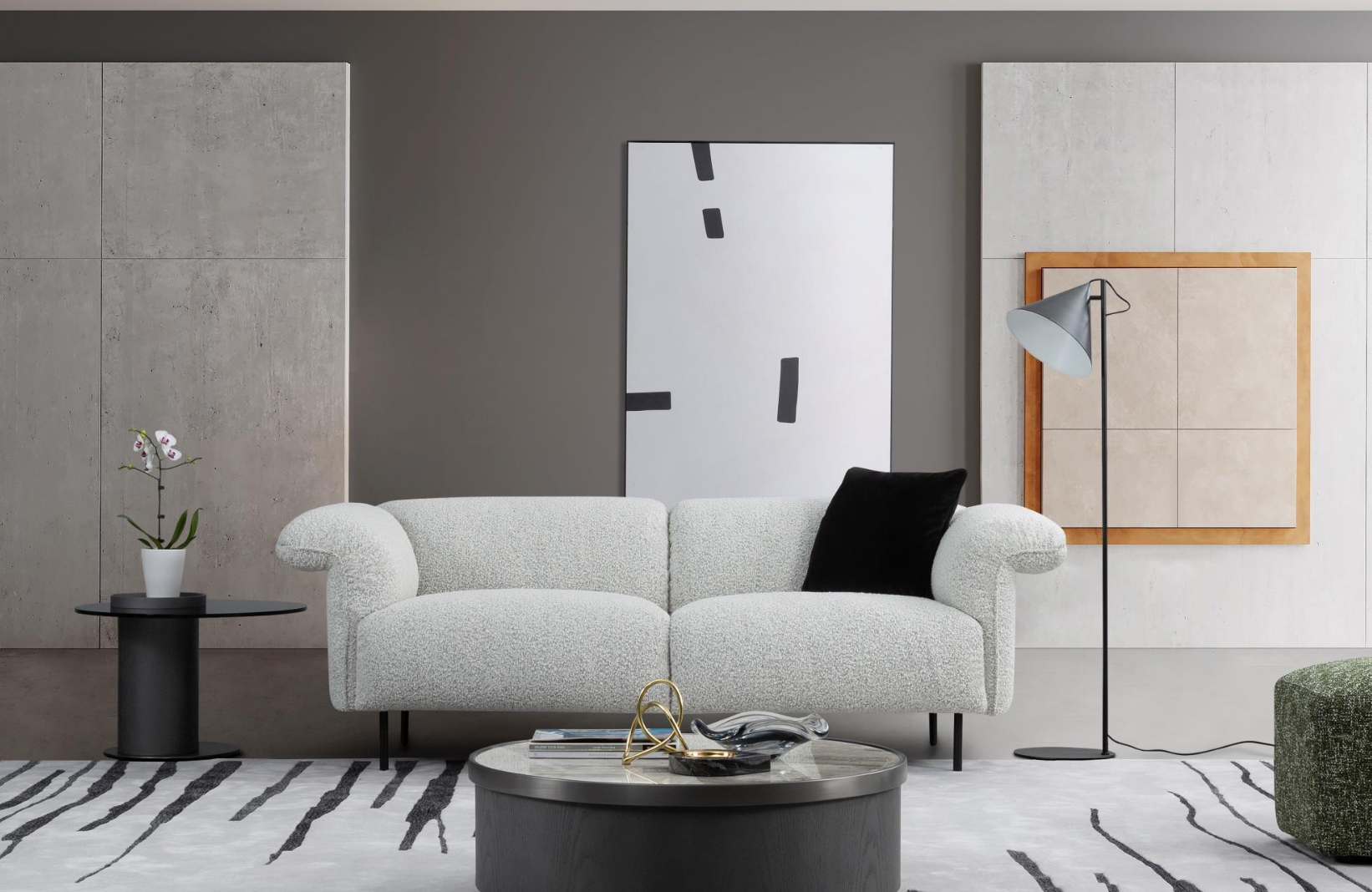
If fabric is your preference, look for a high-GSM option with tight weave construction. The Belmont fabric available across the Domicil range, at 630gsm, is a good example — robust and textural, built for durability without sacrificing the warmth that fabric brings to a room.
Whatever you choose, avoid light-coloured fabrics in pale, delicate weaves for a sofa that will be used heavily. They will show wear faster than the sofa itself warrants.
Size and Configuration for a Working Life
The configuration question matters more for work-from-home use than it might seem. A large L-shaped sectional can feel generous and inviting in the evening but becomes problematic as a working position — you tend to end up twisted toward one arm or perched at an angle that puts strain on your neck and shoulders.
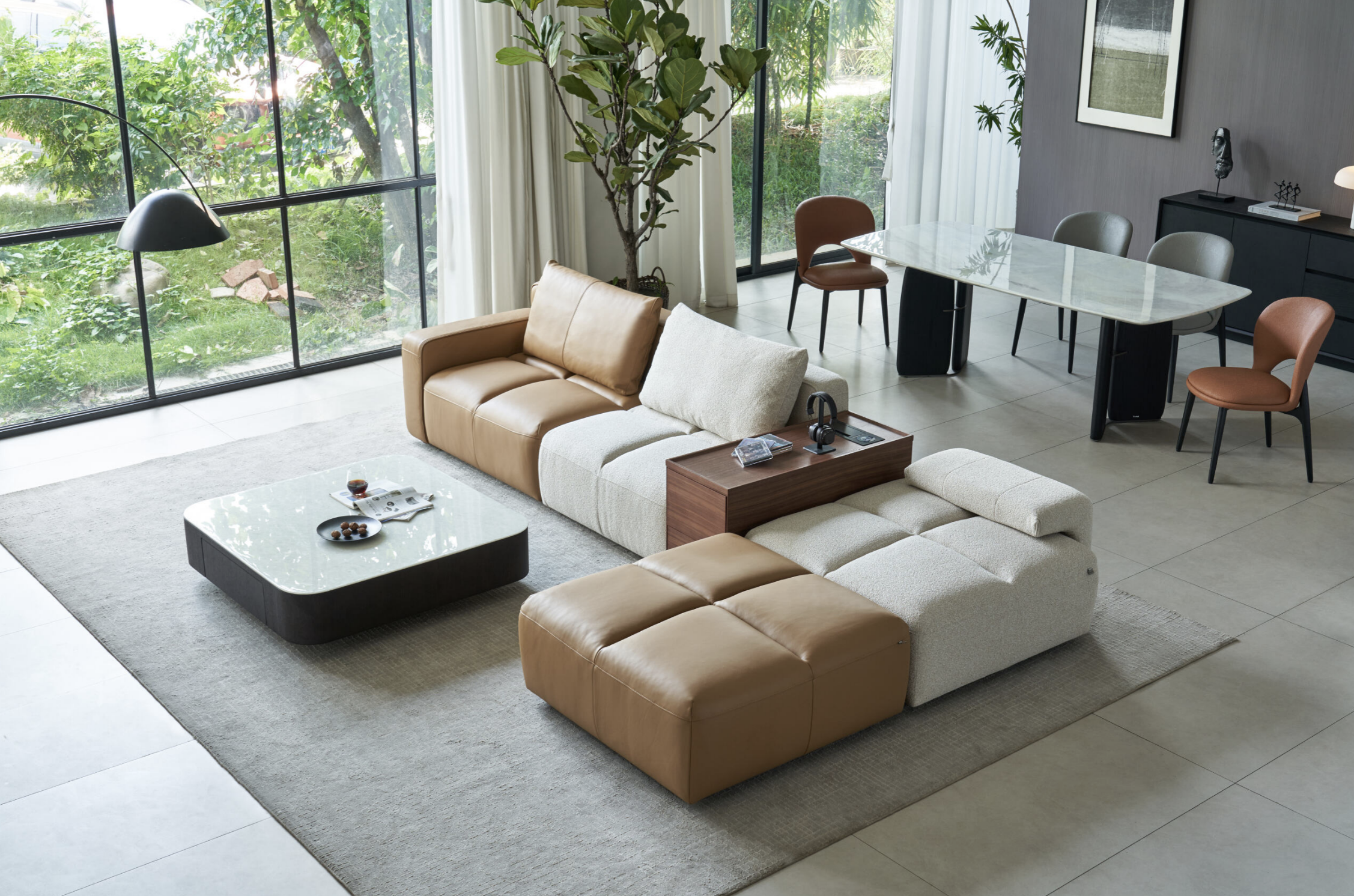
For work-from-home use, a well-proportioned two or three-seater — or a modular configuration that includes a single chaise — tends to work better. The chaise gives you the option to shift position across a long working day, which is important for circulation and concentration. The Reversi sofa is worth considering in this context — its modular form allows you to configure a layout that works for both working hours and the evenings that follow them.
The Transition Matters
One of the less-discussed challenges of working from home is the psychological difficulty of switching off. When your living room is also your office, the space that should signal relaxation carries the residue of the working day.
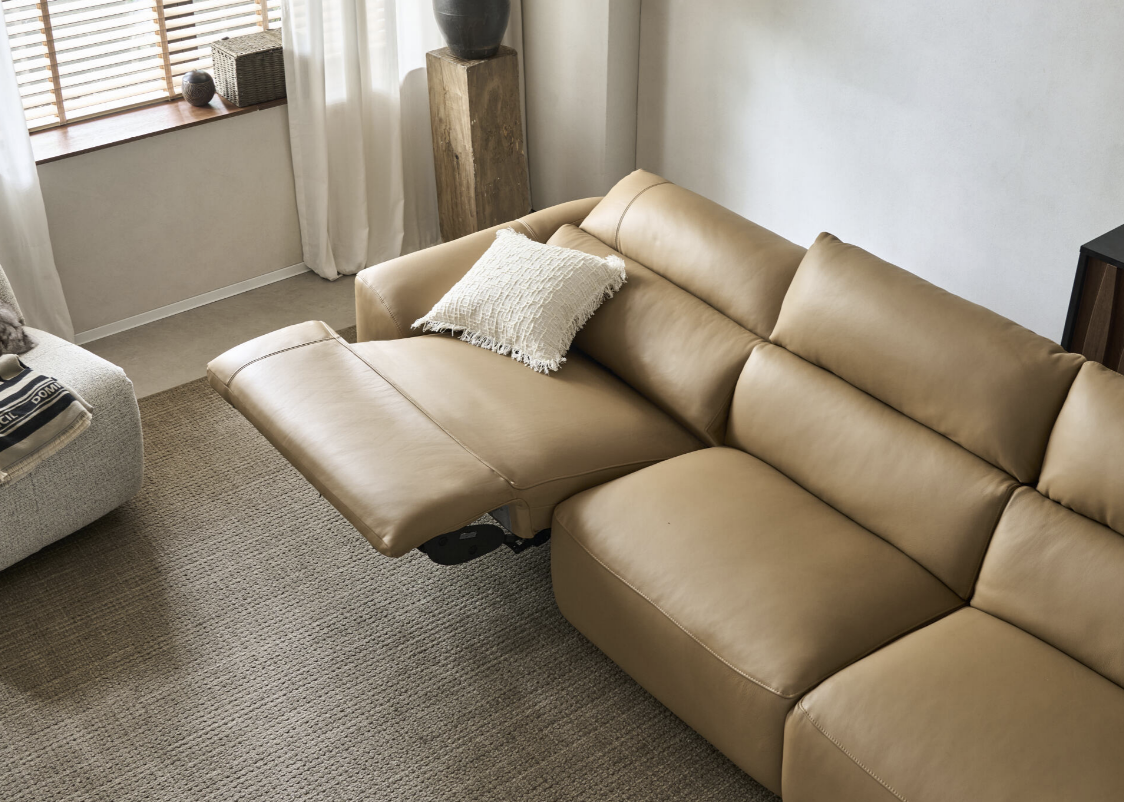
A sofa that genuinely supports that transition — one that is comfortable enough for focused work but also capable of the deeper comfort that signals the end of the day — is worth its weight in that alone. The goal is not a sofa optimised purely for work. It is a sofa that makes the shift from one mode to another feel like a genuine change of state.
That is, ultimately, what good furniture has always been about. Not performing one function perfectly, but supporting the full range of a life lived well.
Explore the full Domicil collection at domicilishome.com